I get sent hundreds of tracks a year to mix, and in some of the songs people have shortchanged the vocal recordings in a variety of ways. I won't even mention a song's tempo and key choice, as those should be determined before one starts tracking a singer. Here's a list of the most common recording offenses that I come across:
1. Singing Too Close to a Cardioid Mic
I'd say 75 percent of what I get sent has this issue. Proximity effect, that low end buildup from a cardioid pattern, is real, and it makes vocals sound boomy, dull, and nasally, plus they become much harder to place in a mix. I know you might be trying to sing closer to the mic to keep the sound of your room out, but you likely just made things worse.

2. Too Much Room Tone
The opposite of singing too close to a mic, it can smear and obscure the words and add a disorientating spatial sound that will likely not fit the music.
3. No Pop Filter on the Vocal Mic
I've seen people on the internet claiming that pop filters are unnecessary and ruin the sound. Don't be stupid, use a filter. Not only will it help get rid of plosives, they can also help keep the mic's diaphragm clean. Maybe even use two filters; I often do. Buy a bunch – they're cheap!

4. Unintended Distortion
We all know an intentionally distorted vocals can be cool, but a clipped or fuzzed out word on an otherwise clean take jars the listener right out of the song. Listen closer to what you are doing. Take the mic's preamp gain down a click.
5. Extreme Sibilance
This one can be difficult. Sometimes just a little extra distance between the vocalist and the mic helps. A slight tilt of the mic can help. But picking the mic that sounds balanced on that person's voice is the real key. Even a small mic locker can offer choices to fix this.
6. Not Spending Time to Get Great Performances
Take some time! It’s what you are there for. Let the singer do multiple attempts on different days. Don't cram the vocal sessions in at the end of a tracking day! Do vocal passes right after basic tracks are done, "just for reference," and then do more on different days. Think about every word. And, if you're the recordist, listen closely and suggest changes that might help.
7. Editing Everything Too Tight
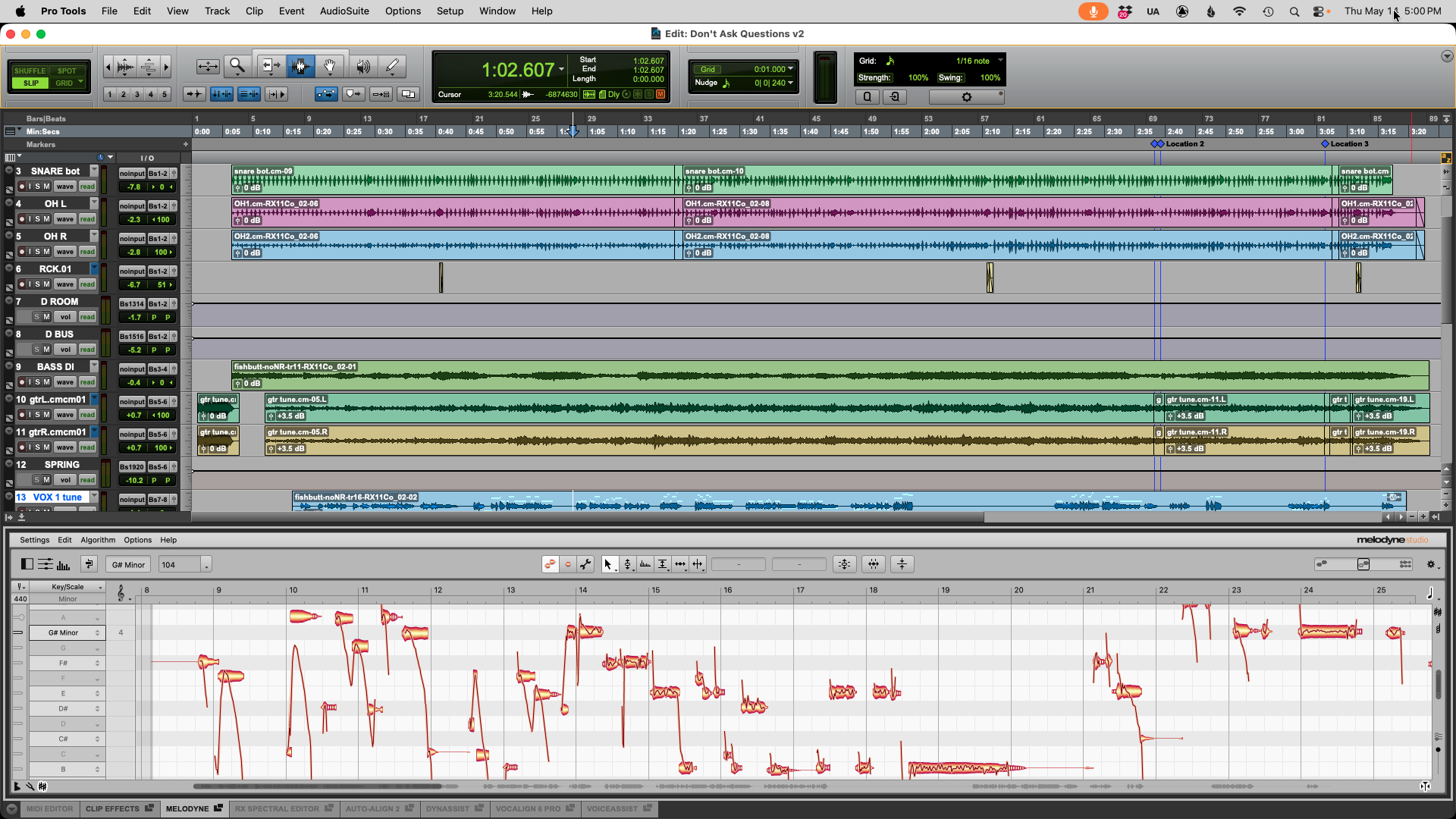
At least half the tracks I'm sent have the vocals so tightly edited that ends of words are clipped off, breaths are cut off halfway, or there’re no breaths, and it all starts to sound unnatural. If I'm trying to remove background noise and there's no non-words spots to sample, I cannot get rid of it. Plus, since it's now so tightly edited, you'll hear the background noise come in and out of the mix. Oops.
8. Reading Lyrics Off a Phone While Recording
Once this crackling EMI (electromagnetic interference) gets on the vocal track, you're screwed. Print them out, use airplane mode, or memorize your lyrics. Just please don't hold your smart phone 2-inches from a mic full of tubes and transformers.
9. Copying and Pasting Flawed Takes
If you're only going to use one version of the chorus vocals and repeat them every time they happen in the song, at least pick a take that is in pitch, in time, and has some emotion to it. But, then again, the best option is usually to just sing every chorus for real. It actually does sound a lot better to the listener, plus, if the engineer hears a flawed pass they can grab an alternate phrase to drop in. Maybe even change some words, inflections, or attitudes. All you have to do is solo and listen to what you plan to paste everywhere, and then you should determine if it's good enough.
10. Background Noises
Lately, I've had a number of tracks where the singer sang near an undamped acoustic guitar and it resonated along with the vocal. Take off your headphones and listen to the room before recording! Air conditioners, traffic, pets, extreme AC hum, and all sorts of crud gets picked up way too often. At least pets are cute, but other unnecessary and avoidable ambient noises are not.
11: Bad Internal Edits
Rendered Auto-Tune with bad entry/exit points, hard edit points that are not crossfaded, and vocal comps in the middle of held notes can create all sorts of garbled noise that takes away from the actual singing. Simply solo and listen before sending out for mixing.
12. Not Editing Anything Out
Why is there 20 seconds of an open vocal mic under the guitar solo section? I'm sure you don't want that in the mix. Right?
Thanks to Aidan Powell for the mic technique photos!