Tutorials » Issue #29 » talkback-mic

Talkback Mic: The Fantastic Automatic Talkback Mic

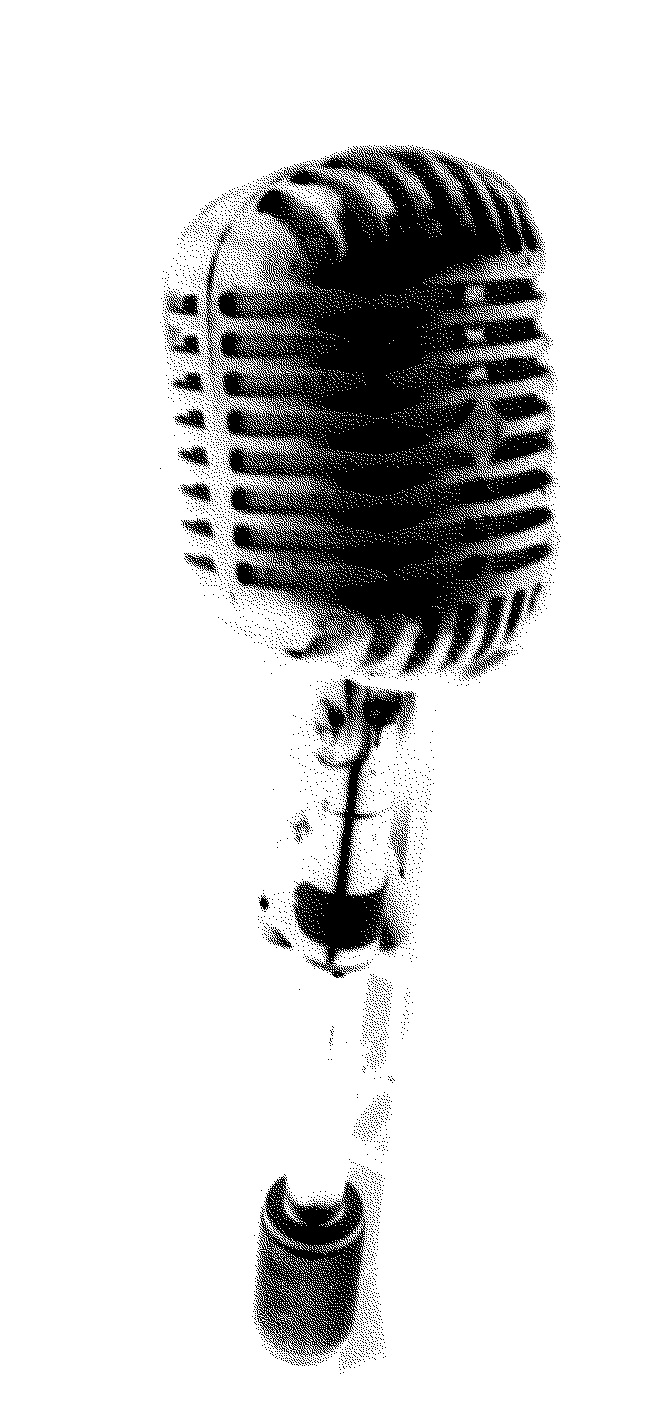
The talkback mic is the usual way to communicate, one-way to your musicians out in the studio. But if you are recording all in one room a closely-mic'ed loud rock band, how do you hear them making comments back to you or how can they talk to each other without taking their phones off? Sometimes the room mics can't be loud enough in the mix to hear conversations clearly. Sure, you can put out separate mics (with or without on/off switches) for each band member and have them on faders so you can mute/un- mute as you need to hear. That requires a lot of extra inputs, mics and attention span. Plus, it is usually off when they say something and then you'll have to ask them to repeat stuff all the time. Tedious! Leaving the mic on all the time, of course, is sonically unacceptable and dangerous to hearing and speakers. I found a way to make it all automatic. You can leave the mic on all the time... without ever being concerned and without affecting the recording. I find, when using this trick, musicians seldom take off their phones to hear each other speak and tracking sessions go better creatively and with less headphone mix/sound complaints.

I'll put an omni-microphone in the middle of the musicians playing area. Condensers work the best as they are more sensitive. I'll use a lot of gain so that I can clearly hear any band member talk at normal conversation levels. This works fine until someone starts playing guitar or hitting a drum! The way to make it automatic is to use a limiter/compressor — a BIG limiter/compressor. I run that mic's signal through a compressor capable of at least 20 dB or more of gain reduction. I may use an EQ/filter or the mic's roll-off to lose subsonic rumble but it is not mandatory. The whole "trick" is in the settings on the limiter/compressor.

I like to use an UREI 1176LN, but most any fast compressor with variable attack and release controls will work. [For those of us on a budget, I recommend the FMR "Really Nice Compressor" for this. -LC] The 1176LN is not the cleanest piece of gear on the planet but it is one of the more vibey ones. I also come from a time when, besides Fairchilds and LA-2As, there were more 1176s than anything else so they got used first for this "utilitarian" job. I use the fastest attack possible — at least 1 ms or faster. On the 1176LN, that would be fully clock- wise. I then use the slowest release time possible — 3 to 4 seconds and on the UREI that would be fully counter clock- wise. (Some 1176LNs, I find, even at slowest release times are not very slow) I use at least an 8:1 ratio or higher and I turn the input knob on the 1176LN full up. When any sounds louder than normal conversation are made in the room the 1176LN, when seeing that much microphone level, will IMMEDIATELY be "nailed" in complete gain reduction and contribute little output. That "hot" omni mic will not be heard much anymore. You will see the 1176's VU meter fully depressed or the gain reduction LEDs on your compressor all lit!

VU meters

The fastest attack insures nobody's ears and speakers get popped and the slow release time means the compressor stays down in "clamp" mode until way after there is no more loud sounds. Adjust the output knob for whatever level you need to record this mic to a separate track or to bring back up on the console. It is very important to only mix a small amount of this talkback/talkback track to the phones and your monitor — just enough to make out conversations. If you and the band hear this mic too well, it will affect the overall sound and mix too much... especially if the song has wide dynamics, breakdowns or stops. If you want to "ride" the release time knob along with the music's changes, you can create some useful moments good for later in mixdown.

Tape Op is a bi-monthly magazine devoted to the art of record making.

Or Learn More

MORE TUTORIALS

ARA = Audio Random Access
TUTORIALS · ISSUE #173 · May 2026

ARA = Audio Random Access

By Larry Crane

What is ARA? It has come up in this issue (in my review for NoiseWorks' VoiceAssist), and we've mentioned it in the past. I think it's an important concept to understand in digital audio production. Basically, think of this as two different computer applications working...

Listening for a Lifetime
TUTORIALS · ISSUE #171 · Jan 2026

Listening for a Lifetime Protecting Your Ears

By Alexander Wright

I’ve spent the last decade mastering records every day. That means long hours of listening, plenty of late nights, and more than a few mornings where the world felt half a dB dimmer than it should. I used to treat that feeling as part of the job. It isn’t. The job is listening – and...

Top 12 Vocal Recording Mistakes
TUTORIALS · ISSUE #170 · Jun 2026

Top 12 Vocal Recording Mistakes

By Larry Crane

I get sent hundreds of tracks a year to mix, and in some of the songs people have shortchanged the vocal recordings in a variety of ways. I won't even mention a song's tempo and key choice, as those should be determined before one starts tracking a singer. Here's a list...

The New (and Preferred) Decibel
TUTORIALS · ISSUE #108 · Aug 2015

The New (and Preferred) Decibel

By Ronald Ajemian

The dB decibel is ubiquitous in the field of audio technology, recording, broadcast, etc. However, a need for a better notation has arisen to avoid confusion on the dB usage for certain measurements. This article explains this new and preferred dB notation with selected examples.

A Brief...

Water in the Air
TUTORIALS · ISSUE #108 · Aug 2015

Water in the Air How Humidity Screws with Instruments in Your Studio

By Garrett Haines

From guitars to drums to cabinets, many of the instruments we record are made of wood. As an organic, porous substance, wood tries to equalize to the surrounding air in terms of temperature and humidity. Having a stable humidity level can help to avoid damage to expensive gear as well...

All About Wall Warts
TUTORIALS · ISSUE #108 · Aug 2015

All About Wall Warts

By Garrett Haines

I was reading a review in another recording magazine in which the writer opened up complaining about a device's external wall wart power supply. He went on and on about how irritating wall warts are and how he was miffed that anyone would even use them. My take was the reviewer was...