Admittedly, this is a hypocritical topic for me to write about — I'm the first to tell you that I don't like limits, especially the speed type. But, as I sit here listening to a record (yes, an actual vinyl disc thingy that's spinning on a turntable) it's gotten me thinking about some things... like limits.
A vinyl record is about 45 minutes long — a physical limitation of the medium. As an artist making a record you had to be aware of that limitation from the very beginning. If a guitar solo is really long in one song, for instance, the whole record can be affected... another song is going to have to be edited, shifted in order to fit on the other side, or dropped all together in favor of a shorter song that will fit on the record. The artist has to be tuned into the big picture — that he or she is making a record — not just putting a bunch of songs on a shiny 80-minute CD. I think this is one of the reasons why there are so many great vinyl records as the limits of the medium really forced artists to make the best out of the 45 minutes they were allotted, instead of the now-all-too-common shoulder shrugging comment, "Put them both on there — if they don't like it they'll skip over it."
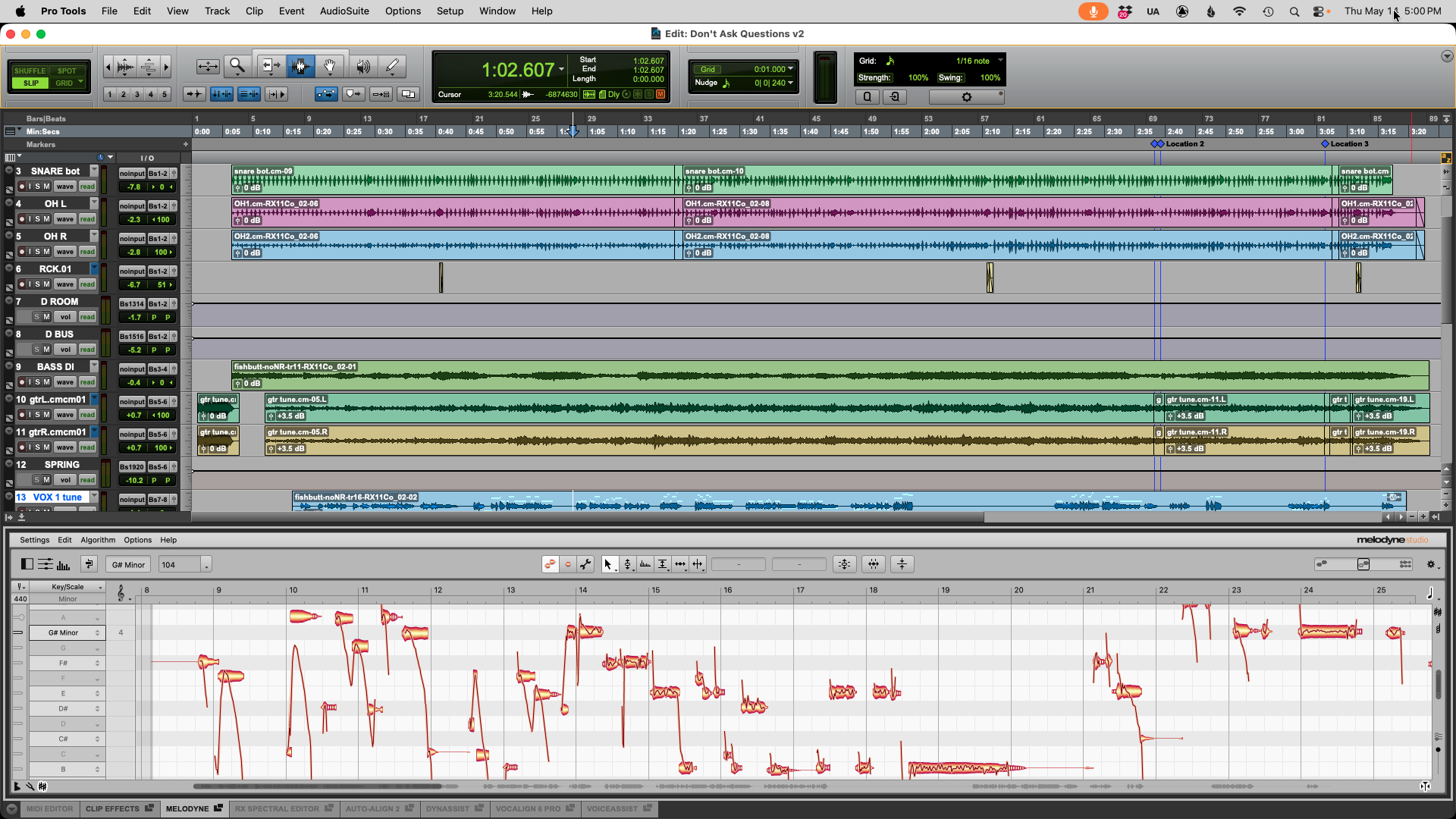
Wait! There's more! Let's take a look at limits while recording. First of all, this whole "unlimited track count" thing has been rubbing me raw for a long time. What's wrong with 24 tracks?!? A million and nine (roughly) records were (and still are) made on 24 tracks or less. This limitation forces the question, "Is my idea of adding a whale sound in the second verse worth sacrificing my three part harmonies in the bridge?" It's a lot like the length of a record situation. One thing affects another — the better song, the better idea, the better performance wins.
Next up: Time. I'm all for budgeting enough studio time for the process to take place. No one wants to be in the "now or never/do or die" situation — those are best played out in John Wayne movies on AMC. However, I think the "studio in the box" propaganda machine has overlooked the negative aspects of what can happen when you have total access to exactly where you left off on a project, 24 hours a day, seven days a week. Without limits it's even easier to get lost in the process because the process has no defined boundaries. I'll be the first to admit that I, on occasion, have mixed a song for a few hours too long. Yes, I've done the unthinkable — I've actually mixed the fun out of a song or two in my day. It's kind of like the old adage, "It takes two people to paint a perfect painting... one to paint it, and the other to shoot him when he's done." Without restrictions we just keep painting until the canvas is black. The solution? Limits.
I know, "Hey come record with me, I'll show you limits like you've never seen!" isn't something you want to hear from a producer or engineer — but the true lesson here is that limits really can be useful. They force the best out of all of us. Having a limit to the number of songs on a record demands (or enforces) better songwriting, having limited track counts forces you to learn how to be a better recording artist. The fact is that limits force us to make decisions. I've come to the conclusion that decision making is becoming a lost art. Often times I see creative energies drained by listening to take after take after take (after take), instead of making the decision, "I can beat that" right away and moving on. Working within limits can create really cool heart pounding moments too — there's nothing like beating a performance by recording over it. Decisions like that really snap you into focus and lead to better performances, along with a huge sense of accomplishment. These limitations also give you the opportunity to listen to your 24 tracks (or less) on playback and ask, "Is this working? Is my message getting across to the listener?" If not, these same limits allow you to either live with it, mute something or do it again. Really those aren't bad choices to live by because, and let's be honest, when was the last time adding a backwards cymbal to a song really solved anything?